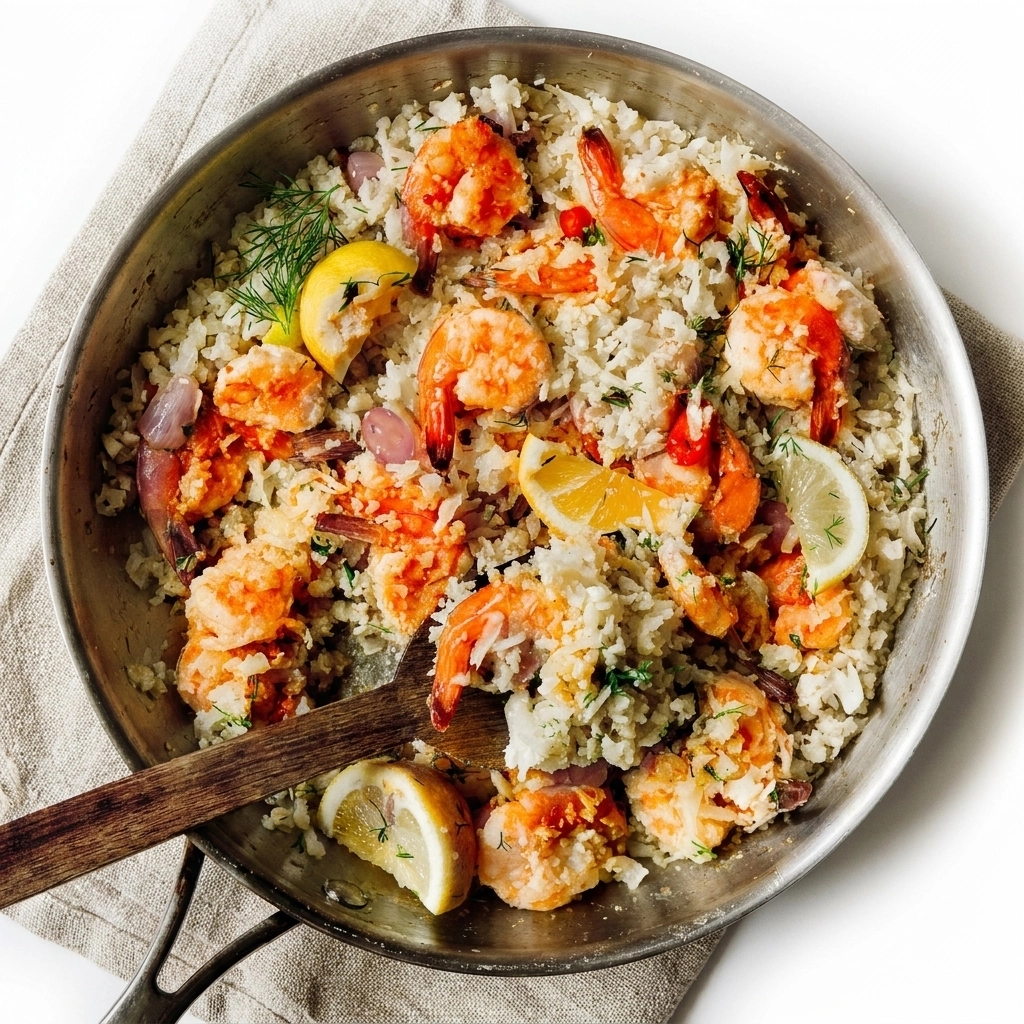
Cauliflower Shrimp Fried Rice |
Who decided that a low-carb lifestyle requires sacrificing the savory, comforting depth of a classic stir-fry? Low-carb eating can be luxurious.
Imagine the sizzle of a scorching wok where plump, pink shrimp meet the earthy crunch of riced cauliflower. The air fills with the pungent aroma of toasted sesame oil and ginger, creating a sensory experience that rivals any high-end Asian bistro in the heart of the city. It is a dish that challenges the notion that vegetable substitutes are merely fillers, proving instead that they can be the star of the show.
I remember the first time I swapped white grains for cauliflower; I was skeptical about the texture. However, once the heat hit the pan and the soy sauce caramelized against the vegetable bits, the transformation was complete. This recipe isn’t just about reducing calories; it is about amplifying the natural sweetness of the seafood through a carefully balanced profile of salt, acid, and heat.
- ●Significantly lower in carbohydrates than traditional rice-based versions.
- ●Packed with high-quality protein from succulent shrimp.
- ●Ready in under 30 minutes, making it ideal for hectic weeknights.
- ●Naturally gluten-free if using tamari or coconut aminos.
- ●An excellent way to sneak more vegetables into your diet without sacrificing taste.
Essential Ingredients |
Cauliflower Rice provides the bulk and a nutty base that absorbs the savory sauce. You can substitute this with finely diced broccoli stems for a punchier flavor.
Large Shrimp adds a sweet, briny snap and essential protein. Swap for scallops if you want a more decadent, buttery profile.
Soy Sauce delivers the quintessential umami depth and salty punch. Use coconut aminos for a soy-free, slightly sweeter alternative.
Fresh Ginger brings a spicy, aromatic zing that cuts through the richness. Ground ginger powder works in a pinch, though it lacks the fresh brightness.
Sesame Oil contributes a toasted, nutty aroma that defines the dish’s authenticity. Toasted walnut oil is a surprising but effective substitute.
Green Onions offer a mild, oniony crunch and a pop of vibrant color. Chives can be used for a more delicate, refined flavor.
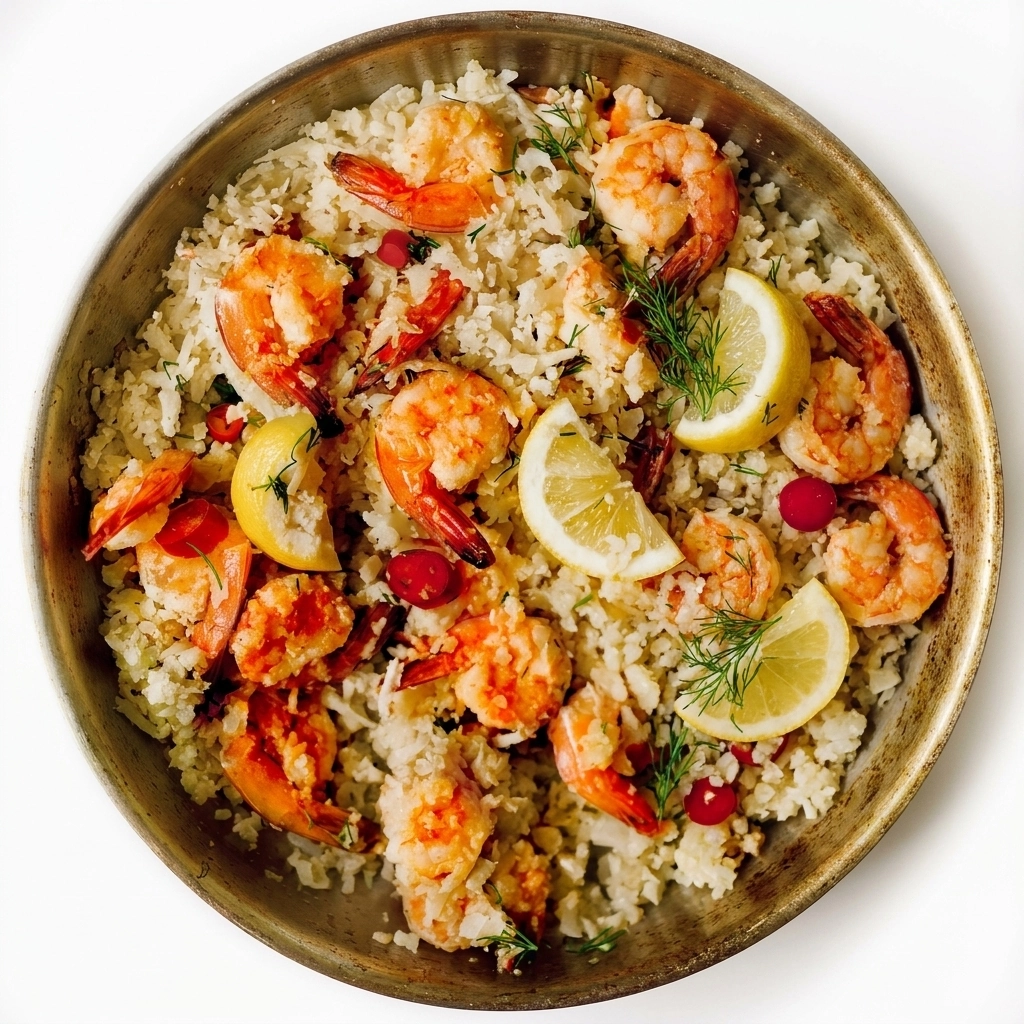 Let’s Make it Together |
- The prep: Pat your shrimp dry with paper towels to ensure they sear rather than steam, then season lightly with salt and pepper.
- The shrimp sear: Heat one tablespoon of oil in a large skillet over high heat until shimmering; add the shrimp and cook for 2 minutes per side until opaque. Remove them from the pan and set aside.
- The aromatic bloom: In the same pan, add minced ginger and garlic, stirring for 30 seconds until the scent fills the kitchen.
- The veggie sauté: Toss in the cauliflower rice and cook undisturbed for 3 minutes to develop a golden-brown crust.
- The flavor infusion: Pour in the soy sauce and sesame oil, stirring constantly to coat every grain of cauliflower.
- The final assembly: Return the cooked shrimp to the pan and fold in the green onions, heating through for one final minute.
Dry your cauliflower rice thoroughly before cooking to avoid a soggy mess.
Avoid overcrowding the pan or the shrimp will boil in their own juices.
Use a wide skillet to maximize surface area for better browning.
Keep your heat high to ensure the vegetables stay crisp and vibrant.
Do not overcook the shrimp or they will become rubbery and tough.
Perfecting the Cooking Process |
Your pan should be screaming hot before the first ingredient touches the surface. This high-heat environment is the secret to the “wok hei” or breath of the wok, which caramelizes the natural sugars in the cauliflower and creates a professional char that you cannot achieve on low heat.
You’ll notice the moisture levels change rapidly. Cauliflower releases more water than rice, so the key is to sauté it quickly and avoid stirring too often during the first few minutes. This allows the moisture to evaporate and the edges to crisp, preventing the dish from turning into a stew.
Add Your Touch |
Trust your nose here and feel free to add a teaspoon of Sriracha or chili garlic sauce if you crave a spicy kick. Adding a handful of frozen peas and diced carrots can transform this into a classic “house special” fried rice with added vitamins and color.
You might consider folding in a beaten egg during the vegetable sauté stage. Push the cauliflower to the side of the pan, scramble the egg in the center, and then incorporate it back into the mix for a richer, more authentic texture.
Storing & Reheating |
Store leftovers in an airtight container in the refrigerator for up to three days. Because cauliflower contains more water than grain, it may release some liquid as it sits, which is completely normal.
To reheat, avoid the microwave if possible as it can make the shrimp rubbery. Instead, toss the rice back into a hot skillet with a teaspoon of oil for two minutes to restore the crisp texture.
1Always use cold shrimp for a firmer, snappier texture upon cooking.
2Squeeze a lime wedge over the finished dish to brighten the umami notes.
3Rinse your cauliflower rice and pat it dry to remove excess bitterness.
4Use a heavy-bottomed cast iron skillet for the most consistent heat distribution.
5Add a pinch of sugar to the soy sauce to balance the saltiness.
FAQ |
- ●Q: Does this taste like real fried rice?A: While it lacks the starchiness of white rice, it captures the savory, salty essence of the original. The combination of sesame oil and soy sauce mimics the flavor profile perfectly, while the cauliflower provides a similar bite.
- ●Q: Can I use frozen cauliflower rice?A: Yes, you can use frozen riced cauliflower, but you must thaw it and squeeze out the excess water first. If you add frozen cauliflower directly to the pan, the moisture will steam the vegetables and prevent them from browning.
- ●Q: How do I prevent the shrimp from overcooking?A: Remove the shrimp from the pan as soon as they turn pink and opaque. aside and adding them back at the very end, you ensure they stay tender and juicy while the rice finishes.
- ●Q: What is the best substitute for soy sauce?A: Coconut aminos are a fantastic alternative for those avoiding soy or gluten. They offer a similar salty-sweet profile but are slightly less intense, so you may want to add a pinch of extra salt.
- ●Q: Can I make this recipe in an Instant Pot?A: This dish is best made on a stovetop because it requires high heat for searing and browning. An Instant Pot will steam the ingredients, resulting in a mushy texture that lacks the characteristic char of fried rice.
- ●Q: Is this recipe suitable for a strict Keto diet?A: Yes, this is an excellent keto-friendly meal due to the low glycemic index of cauliflower. Just ensure your soy sauce substitute is sugar-free to keep the carb count as low as possible.
Cauliflower Shrimp Fried Rice: A Low-Carb Gourmet Twist
- Total Time: 25 minutes
- Yield: 4 servings 1x
Description
A nutrient-packed, low-carb take on classic shrimp fried rice using riced cauliflower for a light yet savory meal.
Ingredients
- 4 cups cauliflower rice
- 1 lb large shrimp, peeled and deveined
- 3 tbsp soy sauce or coconut aminos
- 1 tbsp toasted sesame oil
- 1 tbsp fresh ginger, minced
- 2 cloves garlic, minced
- 3 green onions, sliced
- 2 tbsp vegetable oil
- Salt and pepper to taste
Instructions
- Pat shrimp dry and season with salt and pepper.
- Heat vegetable oil in a large skillet over high heat; sear shrimp for 2 minutes per side, then remove and set aside.
- Add minced ginger and garlic to the pan and sauté for 30 seconds.
- Add cauliflower rice and sauté for 3-5 minutes until golden and tender.
- Stir in soy sauce and sesame oil, mixing well to coat the rice.
- Return shrimp to the pan, toss in green onions, and heat through for 1 minute.
- Prep Time: 10 minutes
- Cook Time: 15 minutes
- Category: Dinner
- Method: Stir-fry
- Cuisine: Asian-inspired