The Art of the Boozy Brat |
Did you know that the original bratwursts from Germany were often seasoned with a variety of herbs and spices that served as natural preservatives before refrigeration existed? It is a wild thought that we owe our current grilling obsession to ancient food preservation techniques. I once tried to make these without beer, and my taste buds staged a full-scale protest; turns out, the brew is the secret soul of the dish.
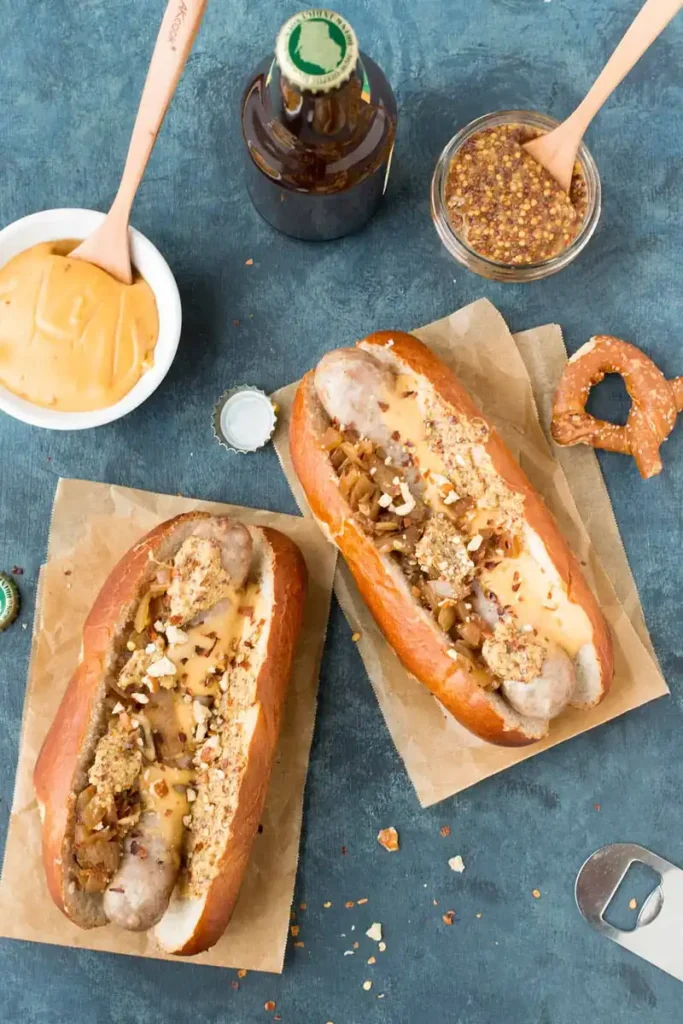
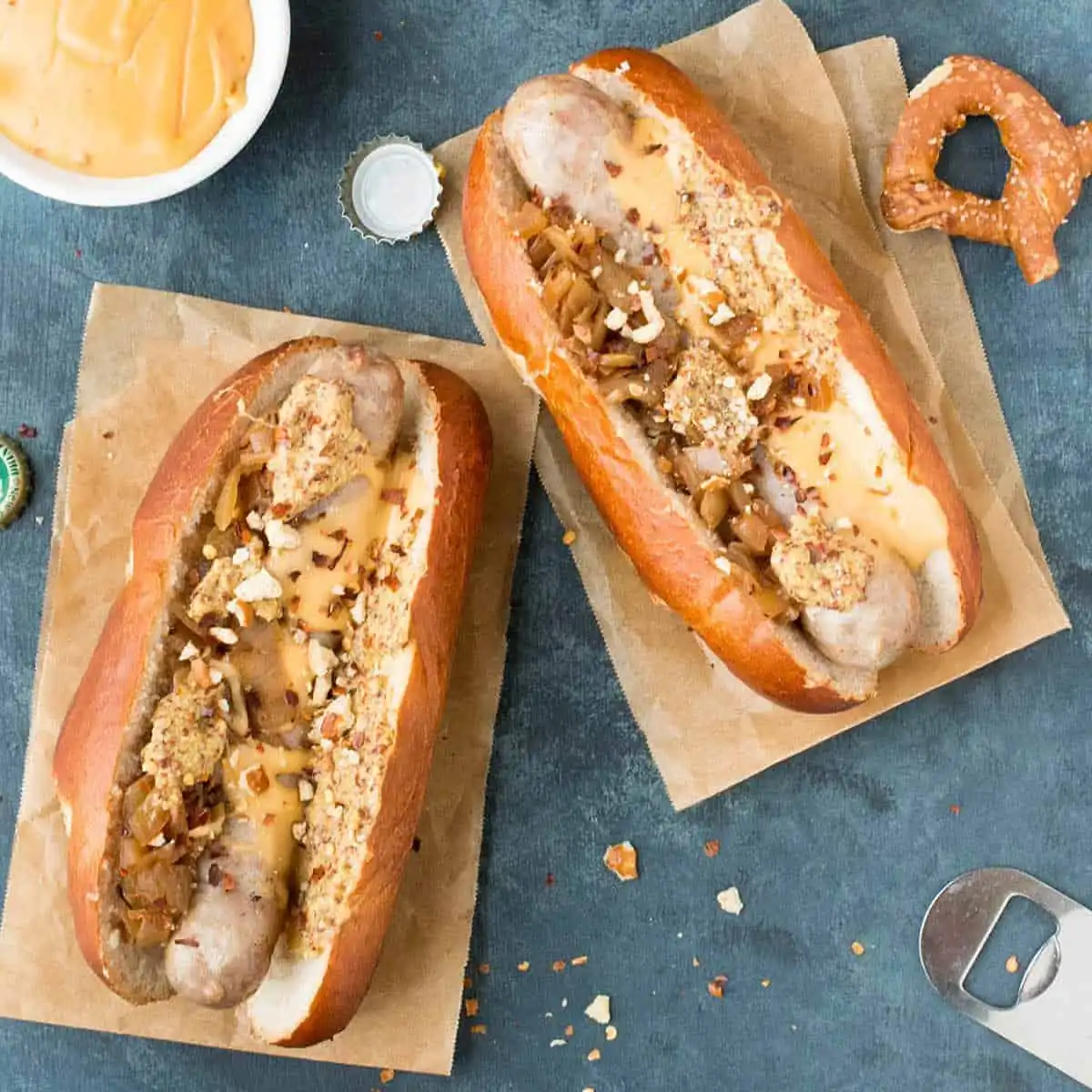
The real magic happens in the contrast between the snap of the grilled casing and the velvety, molten flow of the homemade cheese sauce. It is a textural rollercoaster that keeps you coming back for more, even after you have probably eaten three brats too many. Who knew that combining fermented grains with melted dairy could create such a symphony of savory delight?
Gathering your friends around a smoky grill while a pot of gold (liquid cheese) simmers on the side is the peak of adulthood. I have spent years refining the ratio of hops to cheddar, occasionally failing miserably and ending up with a cheese clump the size of a baseball. Now that I have cracked the code, I am sharing the glory with you.
- ●The beer bath ensures the brats stay juicy instead of turning into salty pencils.
- ●Homemade beer cheese destroys any store-bought dip in a taste test.
- ●It utilizes a one-pot method for the sauce, minimizing the dreaded cleanup.
- ●The smoky char from the grill balances the richness of the cheddar.
- ●It is an impressive crowd-pleaser that makes you look like a grill master.
Essential Ingredients |
Bratwursts, providing a savory, meaty base with a satisfying snap, use one pack of high-quality pork brats.
Lager Beer, offering a crisp, malty aroma and golden hue, use 2 cans for both poaching and the sauce.
Sharp Cheddar, contributing a bold, salty punch and a vivid orange color, use 8 ounces of freshly grated cheese.
Butter, adding a silky richness and a glossy finish to the sauce, use 2 tablespoons of unsalted butter.
All-purpose Flour, acting as the thickening agent to prevent the sauce from separating, use 2 tablespoons.
Dijon Mustard, lending a tangy, spicy kick that cuts through the fat, use 1 tablespoon.
 Let’s Make it Together |
- To prevent the brats from bursting and drying out, simmer the sausages in a foil pan of beer and sliced onions on the grill for 15 minutes.
- To achieve those iconic grill marks, move the brats directly onto the high-heat grates and sear them for 2-3 minutes per side.
- To create a stable base for your sauce, melt the butter in a saucepan over medium heat and whisk in the flour to create a roux.
- To build a complex flavor profile, slowly whisk in the beer and Dijon mustard, stirring constantly until the mixture thickens.
- To ensure a smooth, lump-free texture, turn the heat to low and fold in the grated cheddar one handful at a time.
- To bring the party together, plate the charred brats and pour the warm beer cheese into a bowl for dipping.
Never poke holes in your brats because the juices will leak out and leave you with dry meat.
Avoid using pre-shredded cheese as the anti-caking agents prevent it from melting smoothly.
Keep the beer cheese on the lowest possible heat to stop the oil from separating.
Use a light lager or pilsner to avoid an overly bitter taste in the sauce.
Always toast your buns slightly to prevent them from becoming soggy from the cheese.
Perfecting the Cooking Process |
Temperature control is the difference between a gourmet meal and a charcoal briquette. Keep your grill at a medium-high heat, roughly 375 degrees Fahrenheit, to ensure the interior of the brat is cooked through before the outside burns. If the flare-ups become too aggressive, move the meats to the indirect heat zone of the grill.
Timing the cheese sauce is equally critical. The sauce should be finished exactly as the brats come off the grill. If the cheese sits too long, it will thicken into a paste; simply whisk in a tablespoon of warm beer to loosen it back up to a dip-able consistency.
Add Your Touch |
Could you imagine this with a smoky twist? Try replacing the lager with a smoked porter or a brown ale to give the cheese sauce a deeper, more autumnal flavor profile. You can also stir in some chopped pickled jalapeños for a spicy kick that wakes up the palate.
For those wanting a bit more greenery, serve these with a side of grilled asparagus or a vinegar-based slaw. Substituting the pork brats for chicken or turkey versions works well, though you will need to be more careful not to overcook them, as lean meats dry out faster.
Storing & Reheating |
Leftover brats should be stored in an airtight container in the fridge for up to three days. The beer cheese can also be refrigerated, but it will solidify into a block, which is perfectly normal.
To reheat, avoid the microwave for the brats as it ruins the snap; instead, use a skillet or a toaster oven. For the cheese, heat it gently in a small pot with a splash of milk or beer, stirring frequently until it returns to its molten state.
1Searing the brats after poaching locks in the juices and adds a professional aesthetic.
2Warm your serving bowl for the cheese to keep the dip liquid longer.
3Add a pinch of smoked paprika to the roux for a subtle campfire aroma.
4Use a whisk rather than a spoon for the cheese to incorporate more air.
5Check the internal temperature of the meat with a digital thermometer to avoid overcooking.
FAQ |
- ●Q: Which beer is best for the cheese sauce?A: A light lager or a pilsner is generally the safest bet because they provide a clean, malty flavor without overwhelming the cheese. If you use an IPA, the bitterness of the hops can become concentrated and taste metallic when heated.
- ●Q: Can I make the beer cheese in advance?A: You can certainly prepare the sauce ahead of time, but you must reheat it very slowly. Adding a bit of extra cream or beer during the reheating process helps restore the creamy emulsion that often breaks during cooling.
- ●Q: Why are my brats bursting during the grilling process?A: Brats usually burst because the internal pressure builds up too quickly over high heat. in beer first, you gently cook the interior, making the final sear a matter of color rather than raw meat.
- ●Q: Do I have to use Dijon mustard, or can I use yellow mustard?A: Dijon is preferred because it has a more complex, pungent flavor and a smoother texture. Yellow mustard is a fine substitute in a pinch, but it lacks the depth and a certain “je ne sais quoi” that Dijon brings.
- ●Q: What is the best way to prevent the cheese from becoming grainy?A: The secret is to keep the temperature low when adding the cheese. If the sauce boils after the cheddar is added, the proteins will tighten and separate from the fat, resulting in a grainy or oily texture.
- ●Q: Can I do this entire recipe indoors?A: Yes, you can use a cast-iron skillet on the stove to achieve a similar sear to the grill. While you will miss the smoky outdoor flavor, the combination of beer-poaching and pan-searing still delivers a fantastic result.
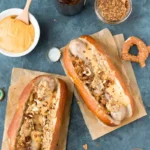
Grilled Beer Brats with Homemade Beer Cheese
- Total Time: 45 minutes
- Yield: 4 servings 1x
Description
Juicy, beer-poached bratwursts seared on the grill and served with a rich, creamy sharp cheddar beer cheese dip.
Ingredients
- 1 pack (approx 5-6) Bratwursts
- 2 cans (12oz each) Lager beer
- 8 oz Sharp Cheddar cheese, freshly grated
- 2 tbsp Unsalted butter
- 2 tbsp All-purpose flour
- 1 tbsp Dijon mustard
- 1 small onion, sliced
Instructions
- Place brats and sliced onions in a foil pan with one can of beer; simmer on the grill for 15 minutes.
- Sear the brats directly on the grill grates over high heat for 2-3 minutes per side until charred.
- In a saucepan, melt butter over medium heat and whisk in flour to make a roux.
- Gradually whisk in the second can of beer and Dijon mustard until thickened.
- Lower heat and stir in grated cheddar cheese until smooth.
- Serve hot brats with the beer cheese for dipping.
- Prep Time: 15 minutes
- Cook Time: 30 minutes
- Category: Dinner
- Method: Grilling
- Cuisine: American/German